Building balanced setups for northern fishing
Rods, reels and lines can look confusing at first. This guide explains the logic behind common in-game setups so you can choose with confidence.
Think in terms of balance
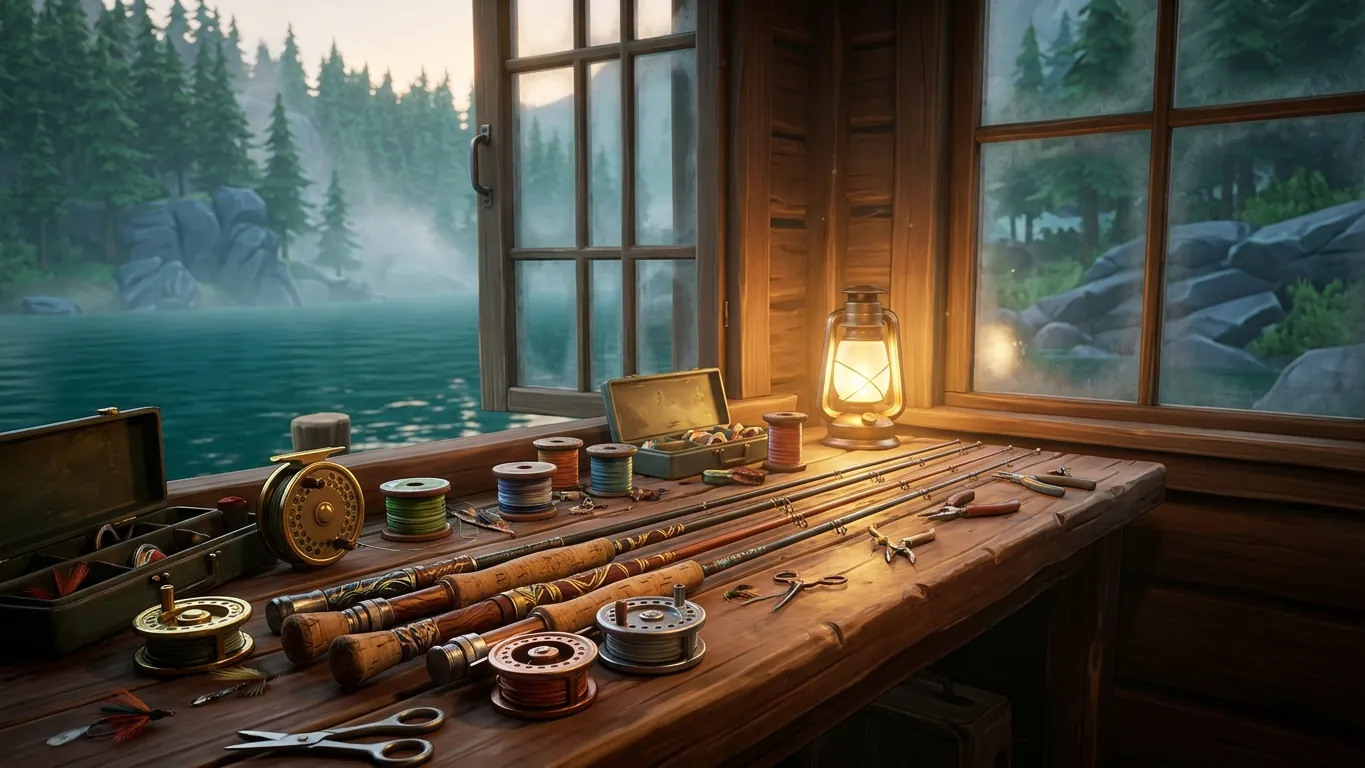
In most fishing games, your rod, reel, line and lure work together as a system. A very strong line on a weak rod, or a tiny lure on a heavy rod, can lead to frustration.
A helpful habit is to start with your target fish and work backward. Small perch and panfish suit light setups. Bass and walleye fit medium gear. Pike, lake trout and muskie usually call for heavier equipment. Matching the setup to the fish is often more useful than simply buying the most expensive item available in the game.
Rods: length, power and action
Many games describe rods using power and action. Power usually refers to how much weight the rod can handle, while action describes where the rod bends.
Light, fast-action rods are often good for small lures and sensitive bite detection. Medium rods are flexible all-rounders. Heavy rods help with big lures and strong fish but may feel less sensitive. Longer rods may cast farther, while shorter rods can give more control near cover. Try a few options and notice how casting distance and bite feedback change.
Reels and drag
Spinning reels are common for beginners because they are easy to use with a wide range of lures. Baitcasting reels, where available, are often favored for heavier lures and more precise casts.
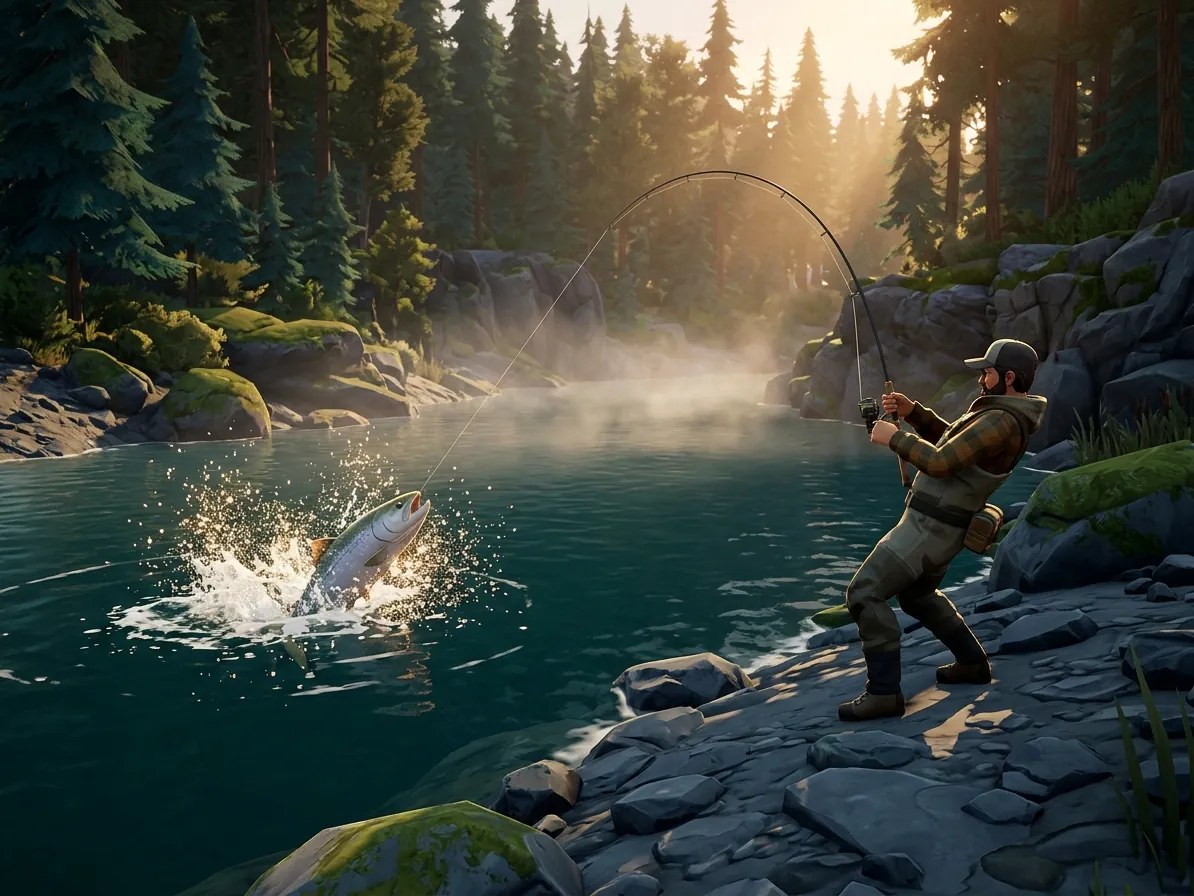
The drag setting is one of the most important controls in many games. It decides how easily line slips when a fish pulls. A drag set too tight can snap your line, while one set too loose can let a fish run into cover. A moderate starting point, adjusted during the fight, is a common approach.
Lines and leaders
Games often offer monofilament, fluorocarbon and braided lines. Monofilament is usually stretchy and forgiving. Fluorocarbon is often portrayed as less visible underwater. Braid tends to be thin, strong and sensitive with little stretch.
Leaders are short sections between the main line and the lure. In pike and muskie waters, a sturdy leader may help prevent bite-offs. In clear water, a lighter, less visible leader can sometimes bring more bites. Each game handles these details differently, so it is worth testing.
A gentle gear progression
You do not need every item at once. Many players begin with one light and one medium setup, then add a heavy rig for predators once they feel comfortable.
Keep notes on which setups you enjoy and which species they suit. Over time you will develop a small, reliable collection that covers most situations on Canadian-style lakes and rivers, and you will spend less time in menus and more time on the water.
Related articles
 Find the fish by reading the water
Practical tips for reading water in Canadian-themed fishing games: weed beds, drop-offs, rocky points, river bends and how to plan a productive route.
Read more
 Winter adventures on frozen northern lakes
Explore ice fishing in Canadian-themed games: drilling holes, choosing depth, jigging techniques and staying patient on frozen virtual lakes.
Read more
 Timing your trips on northern waters
Understand how seasons, weather and time of day often affect fish behavior in Canadian-themed fishing games, with tips for planning better sessions.
Read more