Check your depth
Note the depth of each hole so you can return to productive levels later.
Ice fishing brings a calm, cozy side to Canadian-themed fishing games. This guide covers the basics of drilling, jigging and finding fish under the ice.
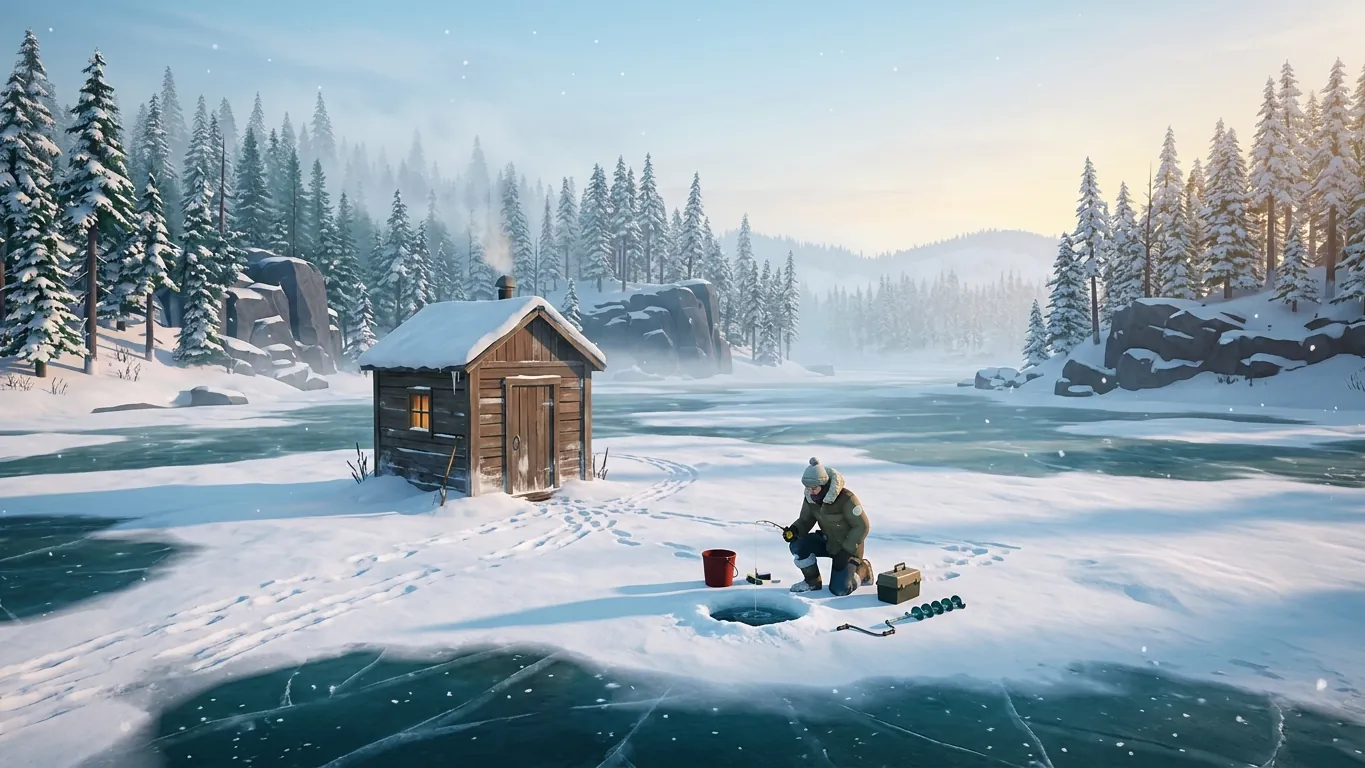
Ice fishing changes the whole rhythm of play. Instead of casting across open water, you drill holes and fish straight down. Your view of the lake shifts, and you rely more on depth tools, rod tip movement and patience.
Many players enjoy this slower pace. The quiet snowy landscape, the crunch of footsteps and the warm glow of a shelter can make winter sessions feel especially relaxing.
Because you cannot easily move a boat in winter, location planning matters even more. Many of the same structure rules from open water still apply. Look for drop-offs, submerged points and the edges of former weed beds.
In many games, drilling several holes in a line from shallow to deep is a smart way to explore an area. You can then move between holes to find the depth where fish are active, rather than staying stuck in one spot.
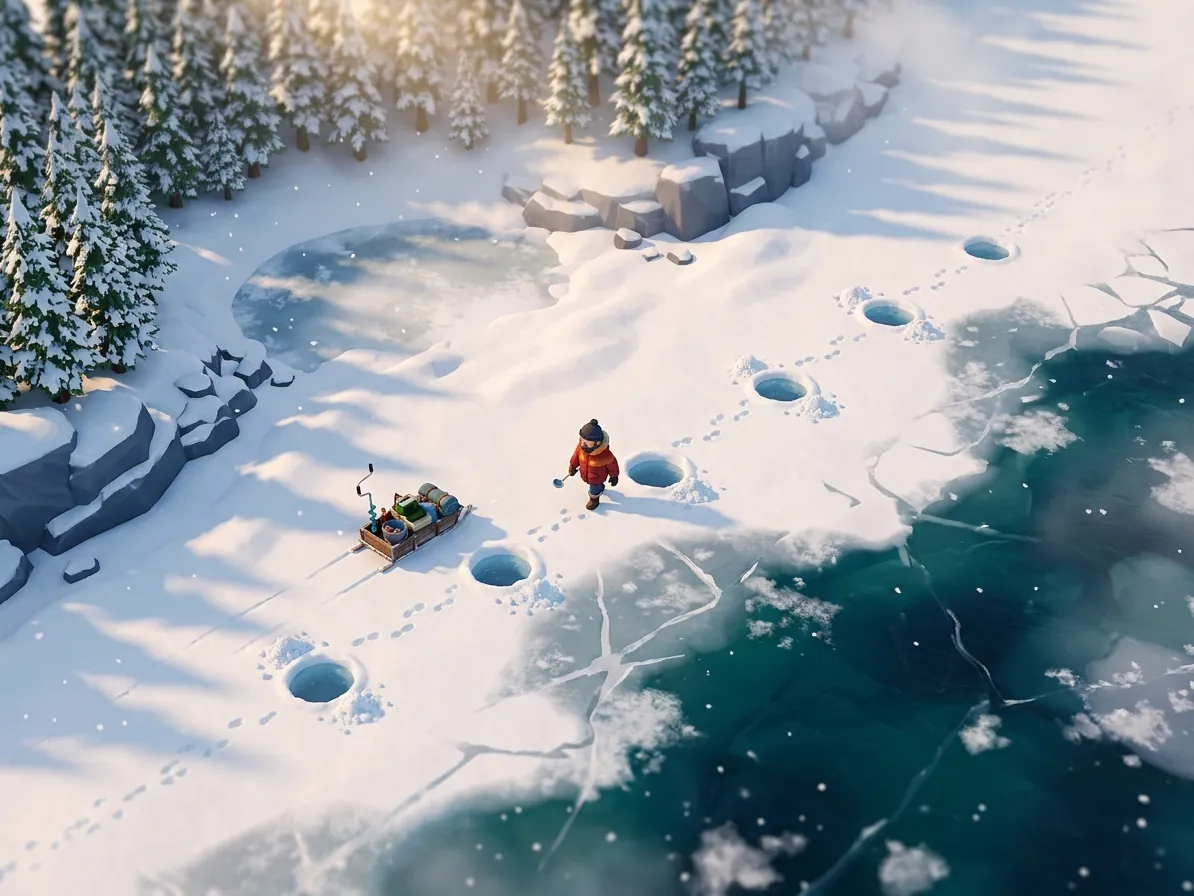
Jigging is the heart of most ice fishing gameplay. You lower a small lure or bait and move it with short lifts and pauses. Many games reward variety, so try different rhythms.
A gentle lift and long pause can suit less active fish. Sharper movements can draw the attention of aggressive predators. Watch for small twitches or changes in line behavior, since winter bites in games are often subtle. Setting the hook a bit faster than in summer can help with these light bites.
These small habits can make your time on the ice smoother and more enjoyable.
Note the depth of each hole so you can return to productive levels later.
Small jigs and thinner lines are common choices for cautious winter fish.
Dawn and dusk often bring more activity in many winter game settings.
If one hole goes quiet, moving to the next is often more effective than waiting.
Some winter days in a fishing game will be slow, and that is part of the experience. Use quiet moments to adjust depth, try a new lure or simply enjoy the scenery.
If you are new to ice fishing in games, start with species like perch or walleye before chasing larger predators. Building confidence with smaller fish teaches you how your game communicates bites under the ice, and that skill will serve you well every winter.
 Timing your trips on northern waters
Understand how seasons, weather and time of day often affect fish behavior in Canadian-themed fishing games, with tips for planning better sessions.
Read more
 Picking the right lure for northern waters
A clear guide to spoons, spinners, crankbaits, soft plastics, jigs and natural baits in fishing games set in Canadian lakes and rivers.
Read more
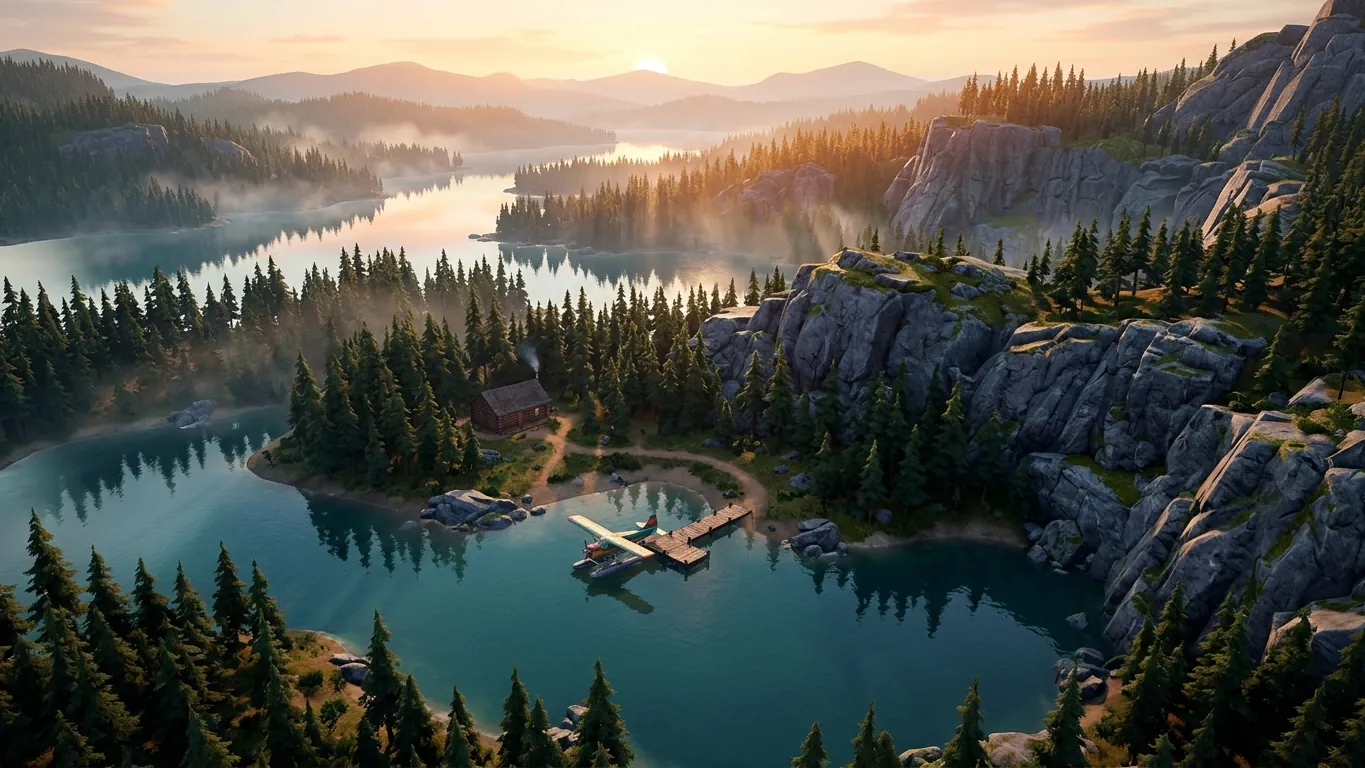 The quiet appeal of northern waters
An opinion piece on why lakes, rivers and frozen bays inspired by Canada make such calm, varied and rewarding settings for fishing video games.
Read more