Picking the right lure for northern waters
Fishing games often offer dozens of lures and baits. This guide explains the main types and when players commonly use them.
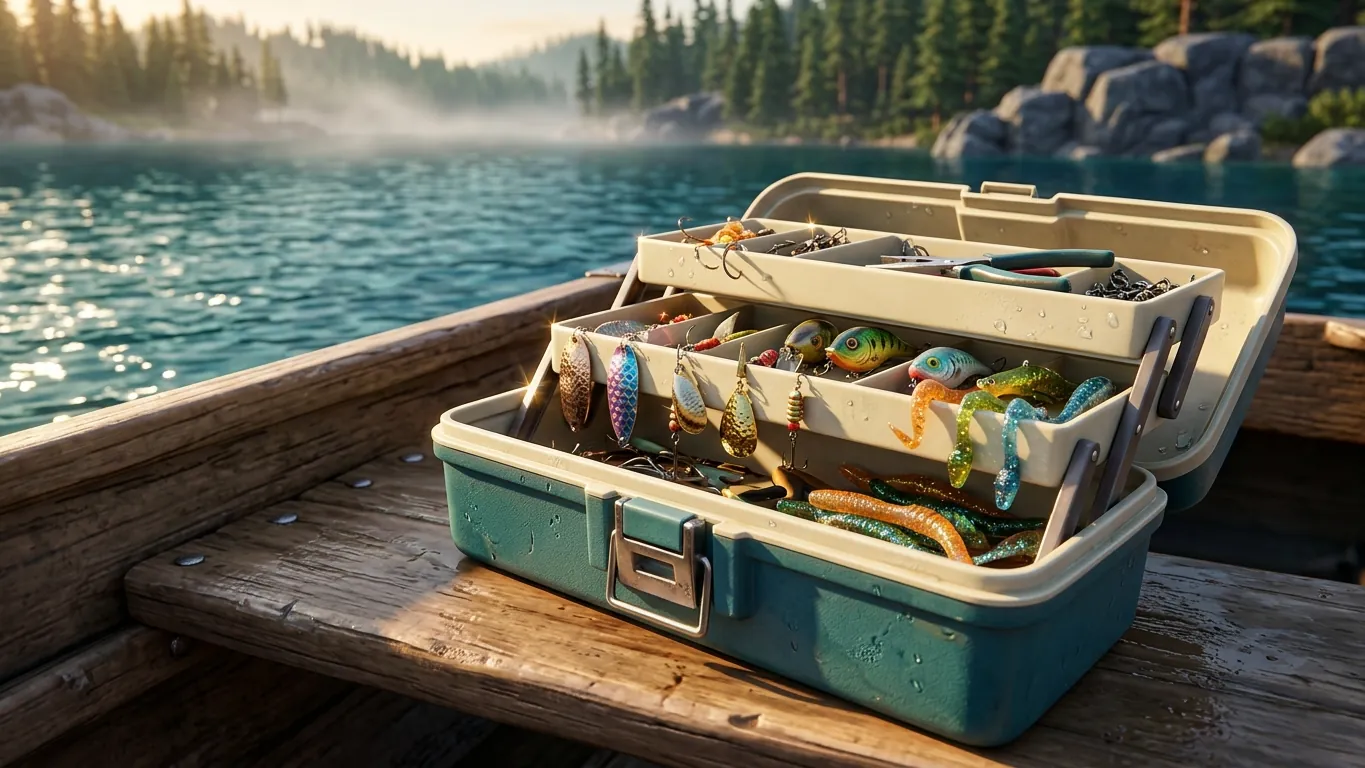
Lures versus natural baits
Most fishing games split terminal tackle into two families: artificial lures and natural baits. Lures imitate prey through shape, color, flash and movement, and usually require you to retrieve them actively. Natural baits, such as worms, minnows or insects, often work well when fished still or slowly under a float or on the bottom.
Both have a place on Canadian-style waters. Many players use natural bait to learn a new lake, then switch to lures to cover more water.
Spoons and spinners
Spoons are curved metal lures that wobble and flash as they move. In many games they are a go-to option for pike, trout and salmon. They cast far and can be fished at different depths.
Spinners have a rotating blade that creates flash and vibration. They are often effective for bass, trout and perch. A steady retrieve is a simple starting point, and slight changes in speed can trigger strikes.
Crankbaits and topwater lures
Crankbaits are hard lures shaped like small fish. Many dive to a set depth when retrieved. Choosing the right diving depth for the area you fish is key, and many games describe this in the lure details.
Topwater lures stay on the surface and create splashes or ripples. They can provide exciting moments when a bass or pike breaks the surface to strike. They are often used in calm conditions near weeds, docks or shorelines, especially in low light.
Soft plastics and jigs
Soft plastics come in many shapes: worms, grubs, swimbaits and creature baits. Their gentle movement makes them versatile for bass, walleye and pike. They can be rigged in many ways depending on the game.
Jigs combine a weighted head with a hook and often a soft body or skirt. They are excellent for fishing near the bottom, along rocky drop-offs and under the ice. A lift-and-drop motion is a classic technique to practice.
Color, size and experimentation
Many players follow a simple idea: natural colors in clear water, brighter or darker colors in murky water or low light. Lure size often matches the target fish, with smaller lures for perch and larger ones for muskie.
These are only starting points. Games handle lure behavior in their own ways, so the best approach is to experiment. Change one thing at a time, note the result and gradually build a small set of lures you trust for each situation.
Related articles
 The quiet appeal of northern waters
An opinion piece on why lakes, rivers and frozen bays inspired by Canada make such calm, varied and rewarding settings for fishing video games.
Read more
 Set your own goals for a year on the water
Ideas for setting personal goals in Canadian-themed fishing games in 2026: species challenges, skill practice, logbooks and relaxed seasonal plans.
Read more
 Your first trip to virtual Canadian waters
New to fishing games set in Canada? Learn the basics of casting, hooking, reeling and choosing your first lake with this friendly beginner guide.
Read more